Skip to content
Book Hallstatt

Explore Hallstatt

Hallstatt weather by month: temperature, rain, snow and lake

Hallstatt has cold, snowy winters and warm, wet summers. In the valley at Bad Ischl, the nearest long-running station, January averages a high of 2.7 °C and a low of -3.5 °C, and July 25.0 °C and 13.4 °C (1991 to 2020). Expect about 161 days a year with at least 1 mm of rain or snow and 74 days with snow on the ground. The lake averages about 20 °C in July. On the Krippenstein at 2,050 m it is 4 to 10 °C colder than the valley, so pack for both.

See dates and pricesWhere to stay

Dachstein Krippenstein: All-in-One Ticket, from €68.60

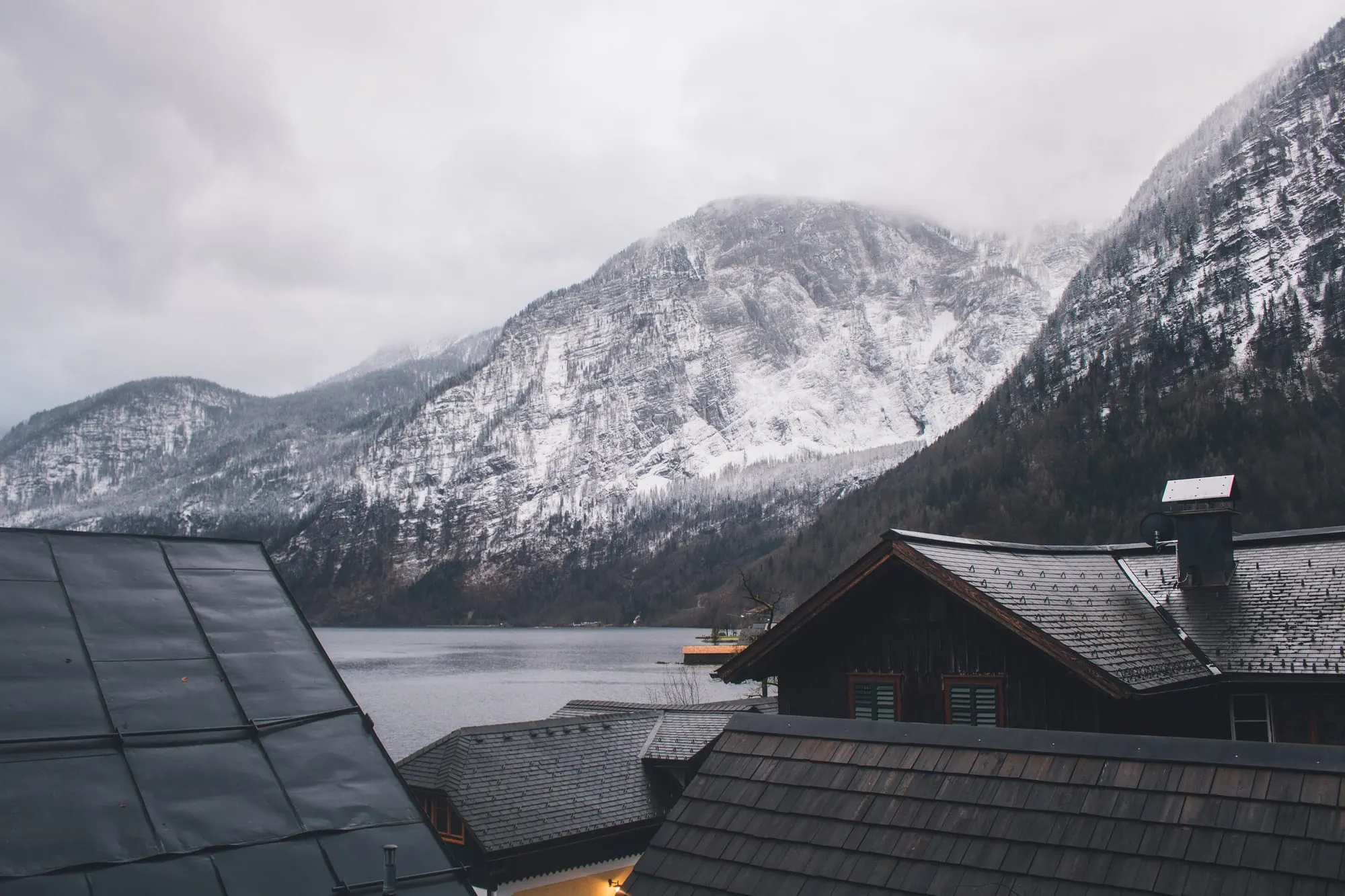
Snowy Hallstatt rooftops and mountains under winter cloud
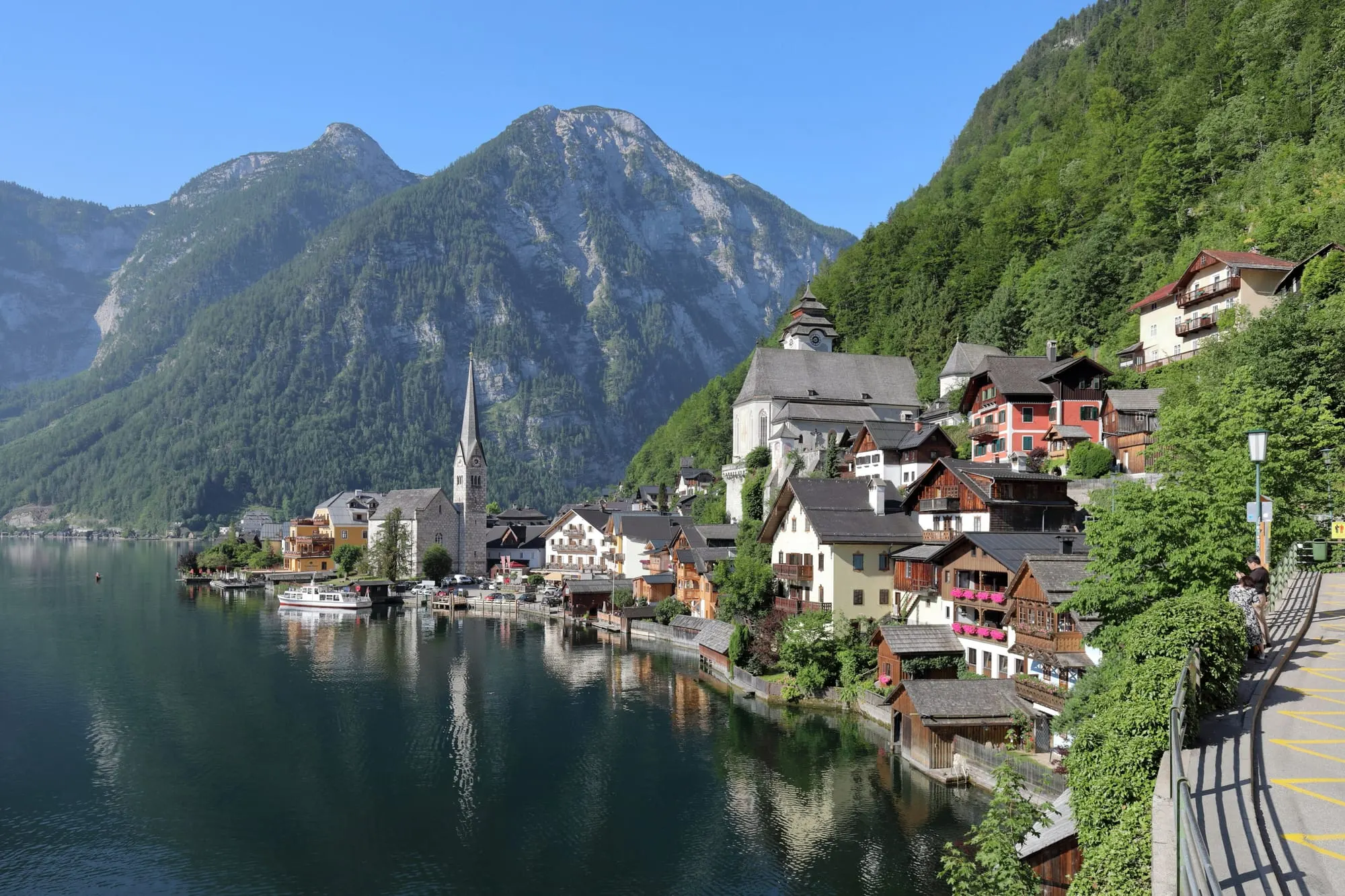
Hallstatt's lakeside houses and church spire from the classic north viewpoint
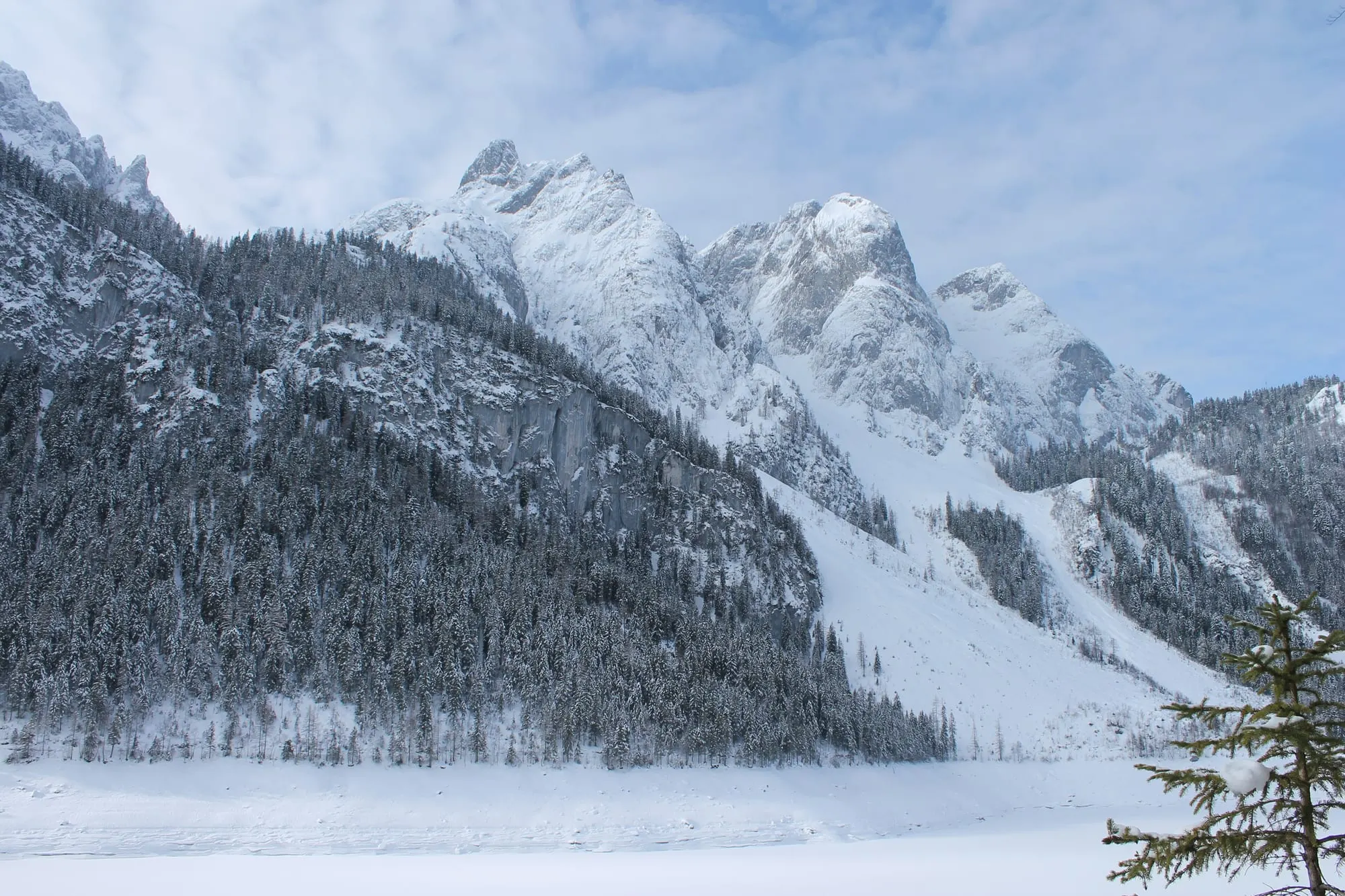
Snow-covered Gosaukamm above the frozen Vorderer Gosausee in winter

4.7/5

20,300+ GetYourGuide reviews of the 14 tours we list

Average of the ratings GetYourGuide publishes, weighted by review count; read 21 November 2026.

What is the weather like in Hallstatt each month?

Hallstatt has no long-running weather station of its own, so the best guide is the valley floor just to the north. Bad Ischl, 11 km away at 507 m, has a complete record for 1991 to 2020 from GeoSphere Austria, the national weather service, and the table gives its monthly averages. Bad Goisern, 7 km north at 538 m, runs a little colder: a January mean of -1.7 °C against -1.0 °C, with about 1,500 mm of precipitation a year against 1,715 mm. An old station in Hallstatt itself, in Lahn, recorded a January mean of -2.2 °C from 1938 to 1969, close to Bad Goisern.

The pattern is simple. Summers are warm and the wettest part of the year, winters hover around freezing with snow on the ground for about three weeks of January, and spring and autumn are mild. One thing the valley stations overstate is winter sun: Hallstatt sits under steep mountains, and in a terrain model the Marktplatz gets only about 47 minutes of direct sun a day in December. The model has not yet been checked against photos; the sun calendar has the details, and the best time to visit adds crowds and opening dates.

Hallstatt valley weather by month (Bad Ischl, 507 m, 1991 to 2020)
MonthAverage highAverage lowPrecipitationDays with 1 mm or moreSunshineDays with snow on the ground
January2.7 °C-3.5 °C123 mm1368 h22
February5.2 °C-2.7 °C100 mm1291 h20
March10.1 °C0.4 °C136 mm14126 h11
April15.8 °C4.2 °C98 mm12165 h2
May20.0 °C8.4 °C165 mm15180 h0
June23.2 °C11.9 °C185 mm16177 h0
July25.0 °C13.4 °C212 mm16198 h0
August24.7 °C13.4 °C183 mm14204 h0
September19.6 °C9.8 °C164 mm13149 h0
October14.8 °C5.8 °C117 mm12126 h0
November8.3 °C1.3 °C109 mm1279 h5
December3.2 °C-2.3 °C123 mm1455 h16
Year14.4 °C5.0 °C1,715 mm1611,618 h74

Monthly averages for 1991 to 2020 from GeoSphere Austria station data (Bad Ischl, station 132), read 21 November 2026. Sunshine is measured in Bad Ischl; the village gets less in November to January.

When the sun reaches Hallstatt: the winter sun calendar

Best time to visit Hallstatt: month by month, crowds, sun and what is open

How cold is it on the Krippenstein above Hallstatt?

Much colder than the village, and snowy for most of the year. The weather station on the Krippenstein, at 2,050 m above Obertraun, recorded a January mean of -5.0 °C and a July mean of 9.1 °C from 1991 to 2008, when it closed. It had snow on the ground for about 232 days a year, and the snow was deepest in March, at more than 3 m on average.

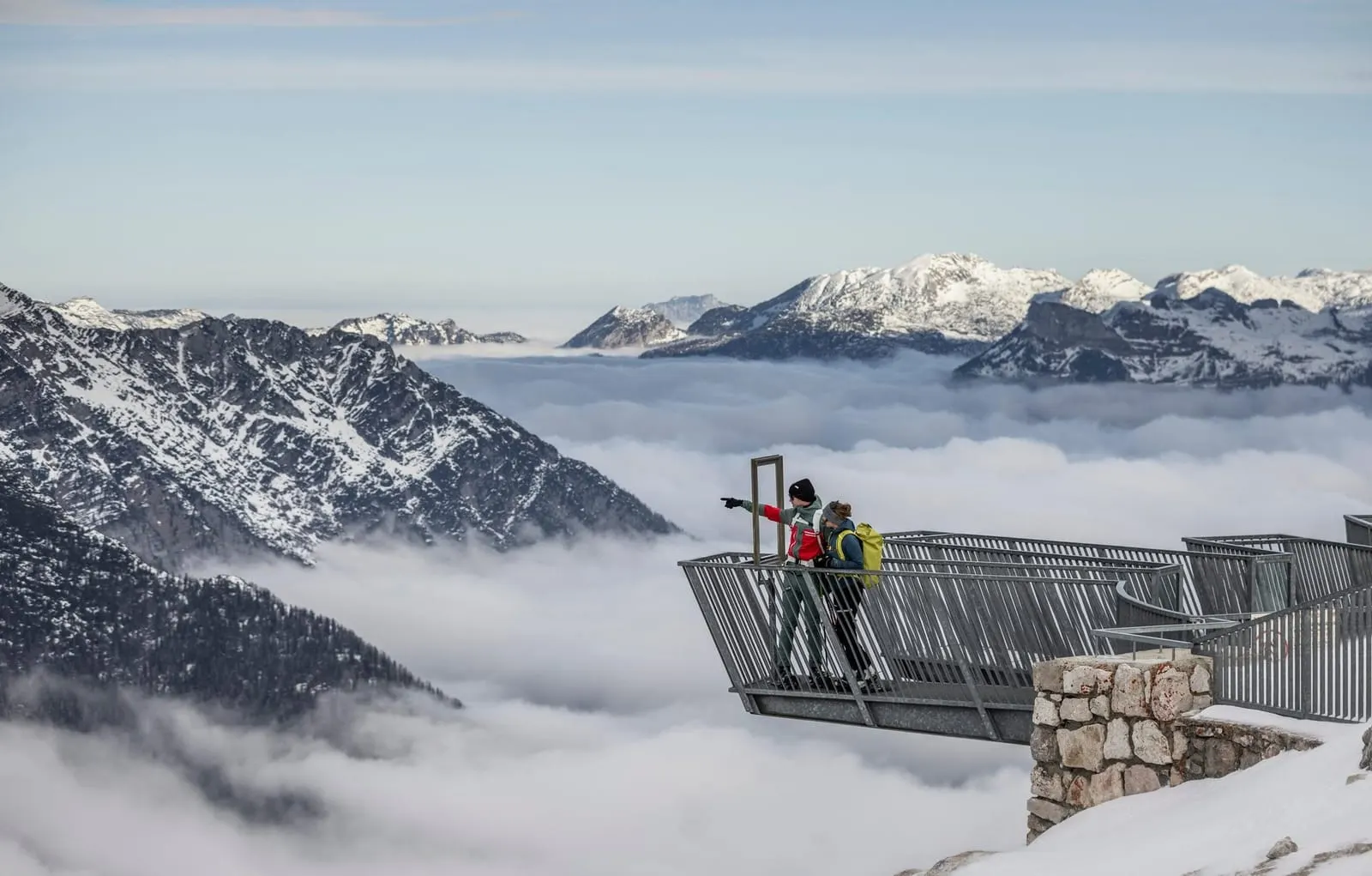
That is the point of going up. In winter the cable car runs daily from 19 December 2026 to 29 March 2027, and the Panorama Ticket takes you to 2,100 m for the snow, the World Heritage Spiral and the 5fingers platform: rated 4.8 out of 5 from 24 reviews on GetYourGuide (21 November 2026), from €47.60. In summer, when the valley is warm, the plateau is cool and clear for walking, and the All-in-One ticket adds the Giant Ice Cave and the Mammoth Cave: rated 4.5 out of 5 from 91 reviews (21 November 2026), from €68.60. The 2027 summer season dates are not yet published. See Dachstein Krippenstein for the full guide.

Krippenstein weather by month (2,050 m, 1991 to 2008)
MonthMeanHigh / lowDays with snow on the groundDeepest snow (average)
January-5.0 °C-1.6 °C / -7.7 °C31196 cm
February-5.9 °C-2.4 °C / -8.5 °C28244 cm
March-3.9 °C-0.3 °C / -6.5 °C31326 cm
April-1.0 °C2.6 °C / -3.5 °C30277 cm
May4.2 °C7.7 °C / 1.7 °C27161 cm
June7.2 °C11.0 °C / 4.6 °C1038 cm
July9.1 °C13.0 °C / 6.4 °C12 cm
August9.5 °C13.1 °C / 7.0 °C13 cm
September5.8 °C9.3 °C / 3.3 °C722 cm
October3.3 °C6.9 °C / 0.8 °C1032 cm
November-2.0 °C1.3 °C / -4.5 °C2686 cm
December-4.5 °C-1.3 °C / -7.1 °C31148 cm

GeoSphere Austria station data, Krippenstein (station 9620), 1991 to 2008 only: the station closed in 2008. Deepest snow is the average of each month’s maximum depth.

Krippenstein Panorama Ticket in winter: cable car to 2,100 m

Krippenstein All-in-One ticket: cable car, Ice Cave and Mammoth Cave

Dachstein Krippenstein: cable car, ice caves and 5fingers, 2026/27

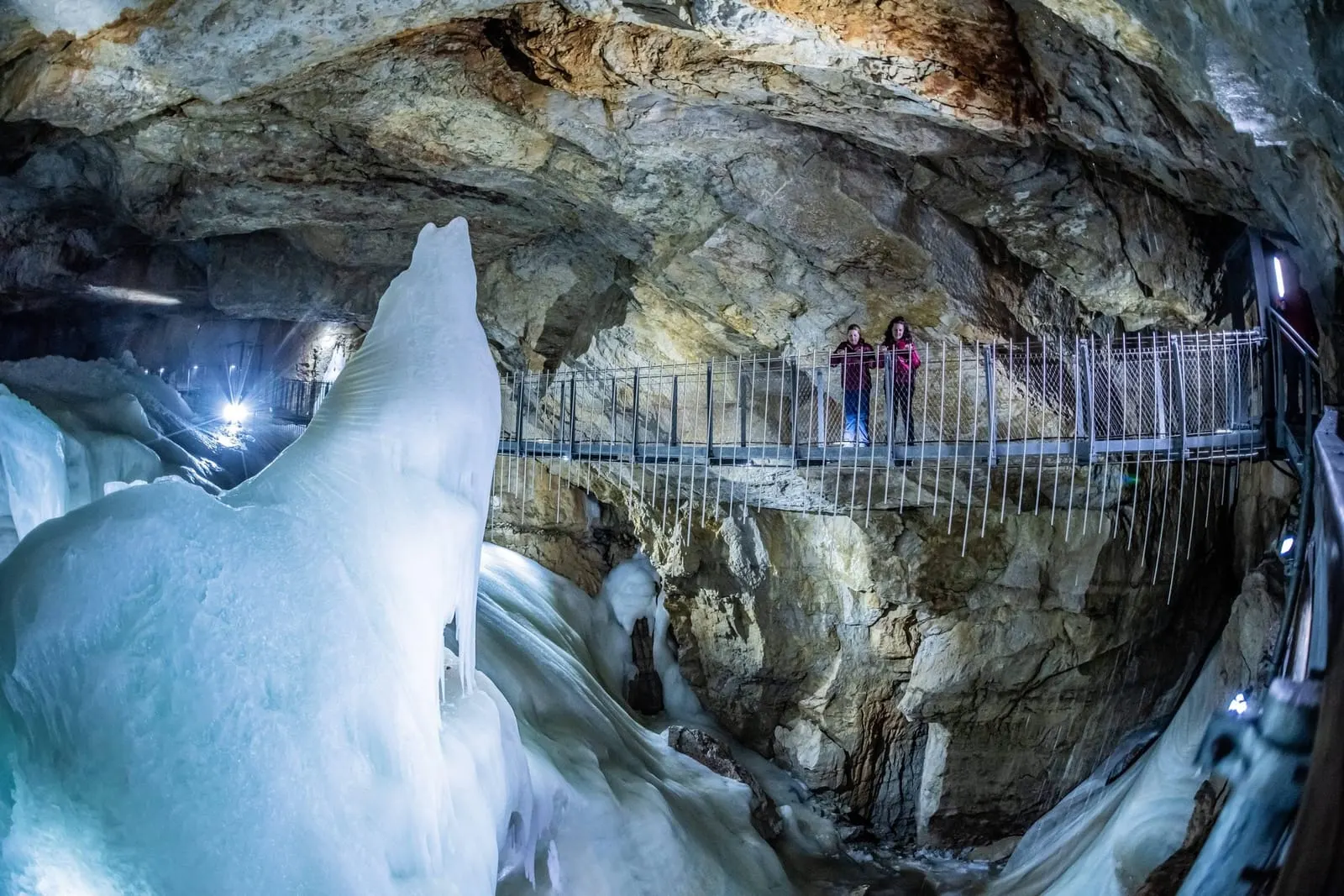
Ice formations and walkway in the Dachstein Giant Ice Cave

4.5/591 reviews on GetYourGuide

✓ Free cancellation up to 24 hours before

Dachstein Krippenstein: All-in-One Ticket

The one ticket for a summer day on the Dachstein: the Krippenstein cable car on all three sections as often as you like, plus one guided tour each in the Giant Ice Cave and the Mammoth Cave, sold by the cable car operator itself.

Departs from Obertraun, Dachstein Krippenstein valley station

Our take on each: Krippenstein Panorama Ticket in winter: cable car to 2,100 m · Krippenstein All-in-One ticket: cable car, Ice Cave and Mammoth Cave.

In winter

What is the weather like in Hallstatt in December?

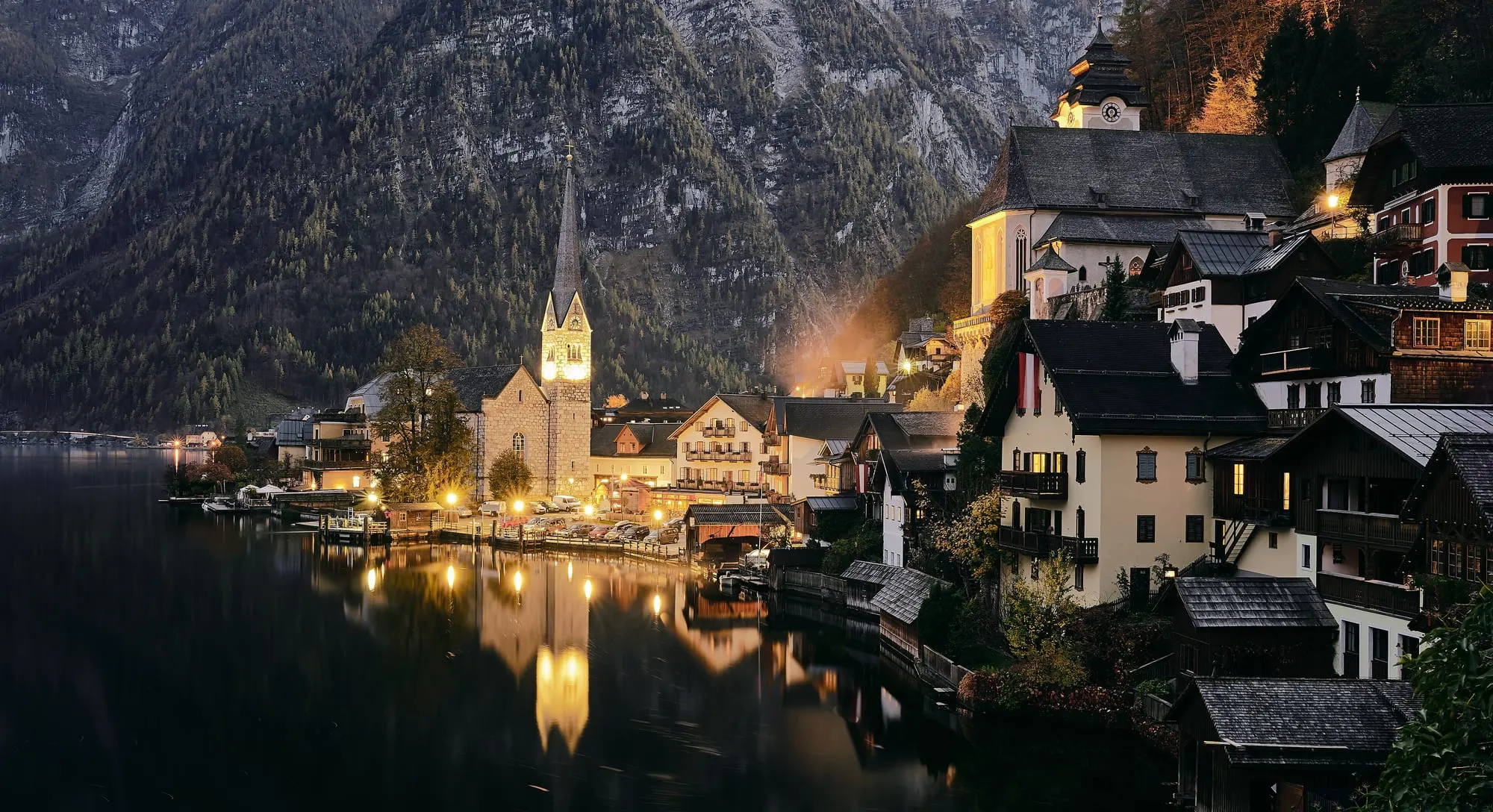
Hallstatt's lights reflected in the lake at dusk
Hallstatt’s lights reflected in the lake at dusk · Photo: Pedro Szekely / Wikimedia Commons, CC BY-SA 2.0, CC BY-SA 2.0

Cold, often snowy and dark early, which is exactly why it is so atmospheric. In the valley at Bad Ischl, December averages a high of 3.2 °C and a low of -2.3 °C, with 22 frost days, about 5 days of snowfall bringing some 49 cm of new snow over the month, and 16 days with snow on the ground. Bad Goisern, slightly higher and closer, averages 18 snow-cover days.

Days are short. Over a flat horizon the sun rises at about 07:46 and sets at about 16:14 in mid-December, and in the village the mountains cut that down to a modelled 40 to 60 minutes of direct sun on the Marktplatz, around 11:00 to 11:45, from 3 December to 10 January, in a terrain model not yet checked against photos. The Christmas market fills the Marktplatz on Tuesday 8 December 2026 from 10:00 to 18:00, and the Krippenstein opens for winter on 19 December. More in Hallstatt in December; for a warm room close to the lanes, see winter hotels.

Hallstatt in December 2026: daylight, weather, what is open and New Year

Hallstatt Christmas market 2026: Advent, Krampus and Christmas dates

Hallstatt in winter: is it worth it, and what is open in 2026/27?

In summer

How warm is Lake Hallstatt for swimming?

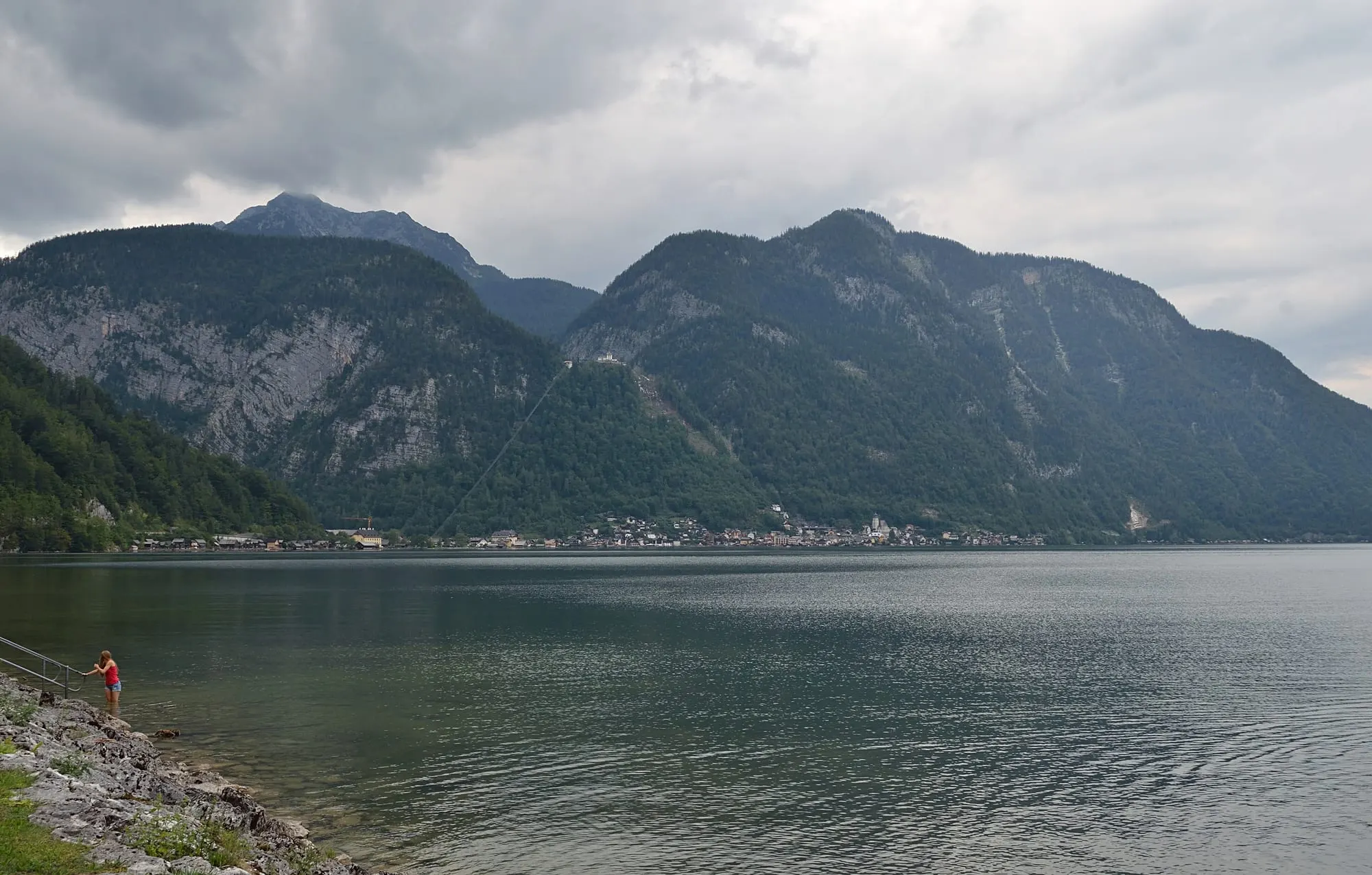
Plassen and Schneidkogel peaks above Hallstätter See
Plassen and Schneidkogel peaks above Hallstätter See · Photo: Herzi Pinki / Wikimedia Commons, CC BY-SA 3.0, CC BY-SA 3.0

Fresh, and at its warmest in July and August. The official bathing-water samples at Hallstatt, just south of the village, averaged 16.8 °C in June, 20.2 °C in July and 19.4 °C in August from 2013 to 2023. In 2026 the Hallstatt sample read 15.4 °C on 15 June and 21.3 °C on 17 August. All four bathing sites on the lake were rated excellent in every year from 2022 to 2025.

The lake stays cooler than its size suggests. The state of Upper Austria’s lake report puts this down to the strong flow of the River Traun through it, and its surface samples from 2018 to 2023 ranged from 4.5 °C to 22.0 °C. On land, July is the warmest month, with valley highs averaging 25.0 °C, and also the wettest, with 212 mm of rain at Bad Ischl, so keep a swim or a boat for the sunny hours. The swimming and lake guide lists where to get in, and hiking covers the trails above the village.

Lake Hallstatt water temperature at the Hallstatt bathing site
MonthAverage (2013 to 2023)Lowest and highest sample2026 sample
June16.8 °C10.0 °C to 24.0 °C15.4 °C (15 June)
July20.2 °C15.0 °C to 25.4 °C18.3 °C (6 July), 18.7 °C (27 July)
August19.4 °C15.4 °C to 23.4 °C21.3 °C (17 August)

AGES bathing-water profile and database, site Hallstättersee Hallstatt, read 21 November 2026. No official winter series is published.

Swimming in Lake Hallstatt: beaches, water temperature and boat hire

Hiking in Hallstatt: waterfalls, the brine path and Krippenstein trails

Hallstatt in summer: crowds, lake swimming, hikes and the ice caves

How often does it rain or snow in Hallstatt?

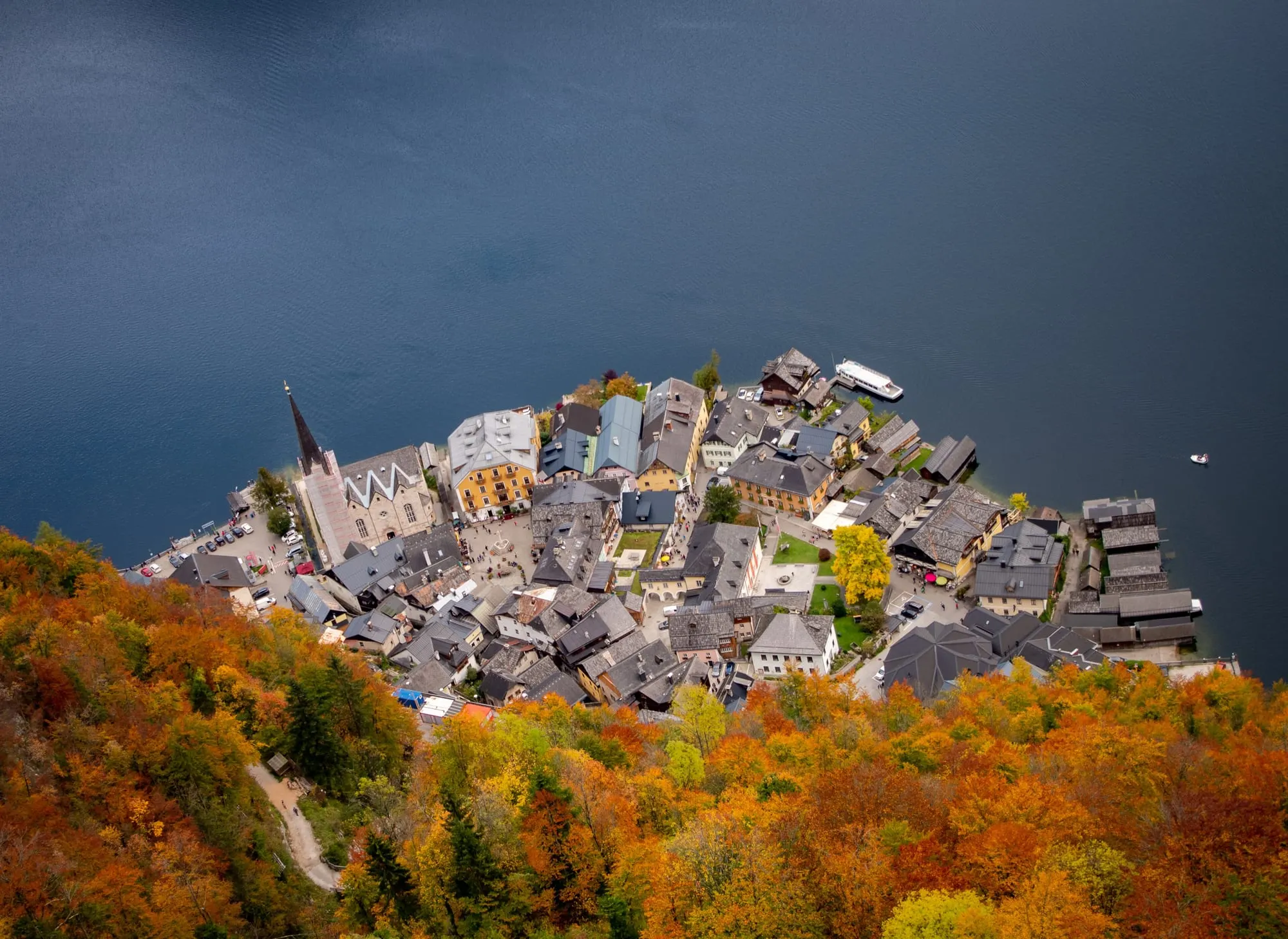
Hallstatt's rooftops above golden autumn forest from high above
Hallstatt’s rooftops above golden autumn forest from high above · Photo: Bhavishya Goel / Wikimedia Commons, CC BY 2.0, CC BY 2.0

Often enough to plan for. Bad Ischl averages 161 days a year with at least 1 mm of rain or snow, spread fairly evenly: 12 to 16 days in every month. The wettest month is July, with 212 mm, and the driest April, with 98 mm. Snow falls on about 25 days a year in the valley, mostly from December to March, and lies on the ground for about 74 days.

The mountains that make the rain also make the scenery, and wet days in Hallstatt have their own beauty: mist on the lake, cloud on the Dachstein. The best plans for them are indoors and close by: the salt mine is underground and open in the rain, and the Hallstatt Museum is a few minutes from the Marktplatz. The rainy day guide has more, and a spa hotel nearby is a good fallback: see spa hotels in the Salzkammergut.

Hallstatt salt mine and Skywalk tickets: prices and hours 2026/27

Hallstatt Museum: 7,000 years of salt and the Hallstatt culture

Rainy day in Hallstatt: salt mine, museum, Bone House and Bad Ischl

What should you pack for Hallstatt?

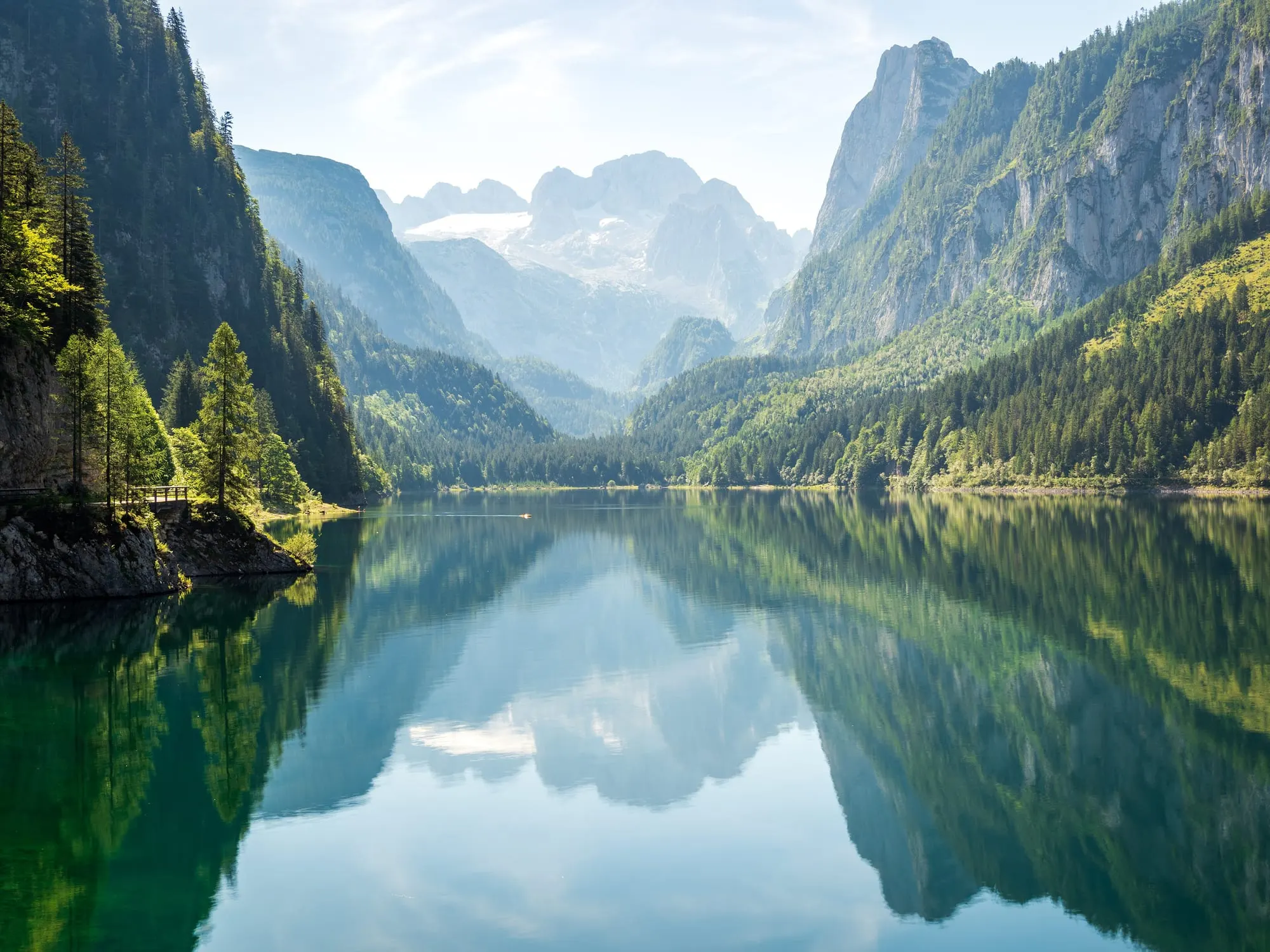
Gosaukamm cliffs mirrored in Vorderer Gosausee on a summer day
Gosaukamm cliffs mirrored in Vorderer Gosausee on a summer day · Photo: Dimitry Anikin / Wikimedia Commons, CC0, CC0

Layers and a waterproof jacket, in every month. Beyond that, pack for where you are going as well as the season.

In winter, bring warm boots with a good grip for icy lanes and steps, gloves and a hat; valley lows average below freezing from December to February. In summer, bring sun cream and a swimsuit, and still a fleece for the evening. Underground, the salt mine is about 8 °C all year, the Dachstein Giant Ice Cave about -2 °C and the Mammoth Cave about 3 °C, so a warm layer is worth carrying even in August. On the Krippenstein, highs average only 13 °C in July and below freezing from December to March.

Travelling light makes the village easier: the centre is closed to day traffic and the lanes are steep. The luggage guide explains the lockers and the hotel shuttle, and where to stay in Hallstatt helps you pick a base close to the ferry or the bus.

Luggage in Hallstatt: hotel shuttle, ferry, lockers and Lahn

Hallstatt weather: questions

How cold is Hallstatt in winter?

In the valley at Bad Ischl, January averages a high of 2.7 °C and a low of -3.5 °C (1991 to 2020). On the Krippenstein at 2,050 m the January mean is -5.0 °C.

Does it snow in Hallstatt in December?

Usually. Bad Ischl averages about 5 days of snowfall and 16 days with snow on the ground in December, and Bad Goisern 18.

What is the warmest month in Hallstatt?

July, with average valley highs of 25.0 °C at Bad Ischl. It is also the wettest month, with 212 mm of rain.

Can you swim in Lake Hallstatt?

Yes, in summer. The bathing-water samples at Hallstatt averaged 20.2 °C in July from 2013 to 2023, and all four bathing sites were rated excellent from 2022 to 2025.

How many rainy days does Hallstatt have?

About 161 days a year with at least 1 mm of rain or snow at Bad Ischl, 12 to 16 in every month.

Does Hallstatt get sun in winter?

Little. A terrain model gives the Marktplatz only about 40 to 60 minutes of direct sun a day, around 11:00 to 11:45, from 3 December to 10 January.

A wider look at Hallstatt

Our hotels are hand-picked. If your dates or budget call for something else, see every hotel and apartment on the big booking sites.

These links go through Stay22, which sends you to a booking site. If you book, we may earn a commission.

More for your trip

Sources: dataset.api.hub.geosphere.at, dataset.api.hub.geosphere.at, dataset.api.hub.geosphere.at, dataset.api.hub.geosphere.at, opendata.ages.at, ages.at, land-oberoesterreich.gv.at, salzwelten.at, dachstein-salzkammergut.com, dachstein-salzkammergut.com. Checked November 2026.